

 Uncategorized
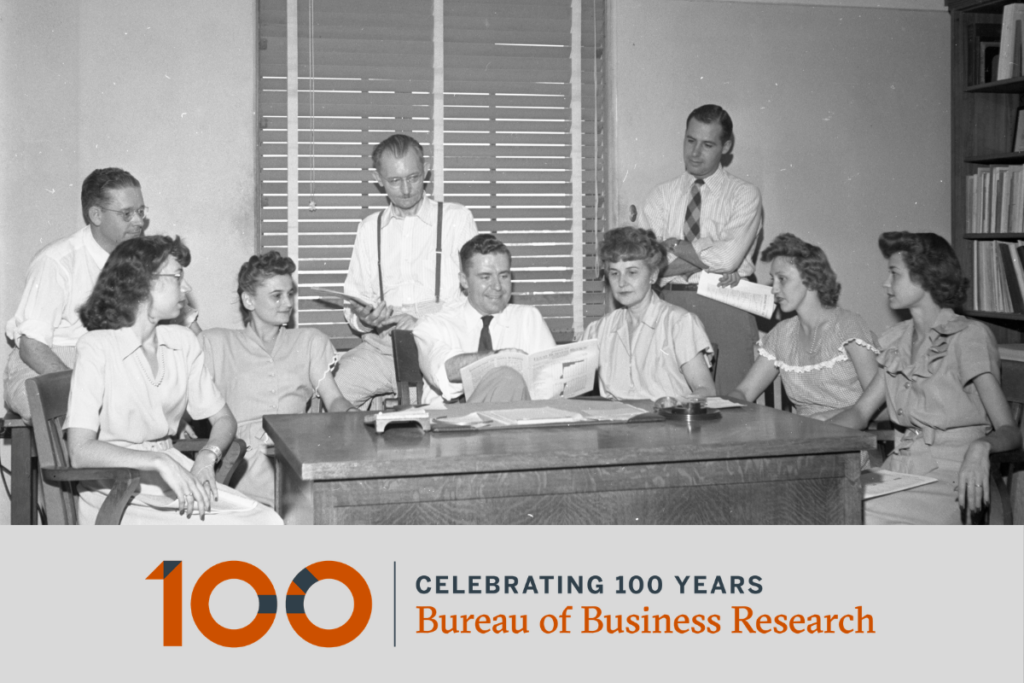
Throughout its history, the BBR has supported the Texas economy and served as a bridge between the University and the larger community outside the Forty Acres. In the photo above, BBR staff in the 1940s gather to celebrate their latest issue of the Texas Business Review. Photo Credit: Stanley Depwe Photography
When UT’s School of Business Administration was organized in 1922, its dean, Spurgeon Bell, repeatedly recommended that the school create a research arm like the one he had seen at Harvard. According to the dean’s vision, the purpose of UT’s research arm would be twofold:
- To promote the industrial development of Texas and its natural resources, and;
- To bring the University of Texas closer to the Texas business community.
In 1926, Dean Bell got his wish: The Board of Regents approved the organization of the Bureau of Business Research to “make available to the businessmen of Texas the best thought on economic and business problems.”
The Bureau of Business Research (BBR) is now the second-oldest research unit on campus, runner-up to the Bureau of Economic Geology. For 100 years, through decades of growth and recession, Texans have relied on the BBR for data collection and analysis, economic forecasting, and economic impact studies.
Today, the BBR is moving in new directions — leaning more heavily into socioeconomic issues and leveraging data science and machine learning to enable smart decision-making for public and private entities.
As we celebrate the century mark, we’re reflecting on the BBR’s impressive legacy of research. That research — carried out by a mix of UT faculty, BBR staff, and UT students — has supported not only businesses but also regional economies, government and nonprofit agencies, and the UT community.
The Texas Business Review: An 84-Year Run
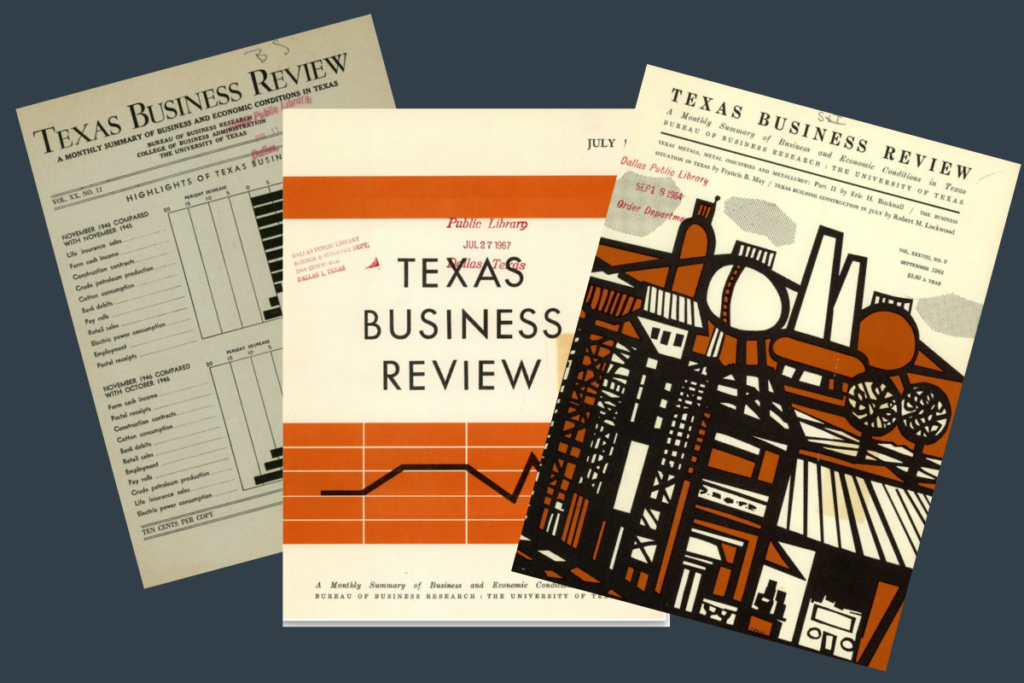
The BBR’s most enduring product, the Texas Business Review, made its first appearance in April 1927 as an 8-page mimeographed leaflet with sections on finance and banking, building permits, cotton, petroleum production, lumber, agriculture and livestock.
The BBR published The Texas Business Review for 84 years, until 2011. To browse issues of the Review is to witness the state’s economic and industrial transformation — from an agricultural and petrochemical center to the highly diversified economy it is today, the 8th largest economy in the world.
Although its most enduring product, the Business Review was not its only sought-after publication. The Directory of Texas Manufacturers, for example, was the state’s primary source of information on manufacturers. Published from 1933 to 1999, the Directory organized the state’s manufacturers according to Standard Industrial Classification (SIC) codes and listed business activities, contact details, employee counts, and sales figures for each company.
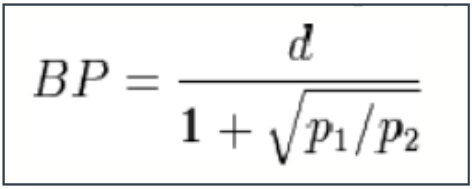 There were more academic-leaning publications, too. In the 1930s, for example, a staff member named William J. Reilly published a monograph entitled, “Methods for the Study of Retail Relationships.” The study came to be known as “Reilly’s Law of Retail Gravitation,” a classic economic development theory that uses a gravitational model to predict consumer shopping patterns and articulate the pull of bigger cities.
Supporting the Texas Economy in Other Ways
In addition to its publishing functions, the BBR contributed to the Texas economy through economic forecasting and impact studies, regional economic analysis, and the frequent convening of business and industry leaders around the state to wrestle with current economic issues.
By mid century, as a repository of information on the Texas economy, the BBR was fielding questions from the public — often responding to more that 2,000 inquires in a single year. Questions ranged from the expected — “What are Texas building totals for 1962?” — to the unexpected: “How many pounds of horsehair and shark livers are produced in Texas?”
Training Students for Future Careers
 A constant and defining feature of the BBR has been its employment of students. In the 1930s, budget and staffing cuts compelled the BBR into hiring students to carry out some of its work. These newly created student jobs were instrumental not only in permitting students to remain in college during the Depression but also in training future economists and statisticians.
Today, the BBR typically employs 8 to 10 student researchers working across a handful of projects. Students come from a variety of programs; business, computer science, economics, engineering are common majors. A mix of undergraduate and graduates, BBR students learn how to collect and analyze data, conduct surveys, engage in data modeling.
BBR Director, Matt Kammer-Kerwick, noted, “Any research team benefits from a diversity of ideas and perspectives. Our students bring fresh and youthful ideas to our projects and they gain real-world experience they can carry into their future careers.”
2007: A Pivotal Year
In 2007, the BBR moved out of the sixth floor of the Business-Economics Building to make room for a rapidly growing business school population. University leaders decided that the IC² Institute, with its focus on entrepreneurship and economic development, was a fitting home for the BBR.
That year marked a subtle shift in focus for the BBR as well — from straight “economics” to “socioeconomics.”
Bruce Kellison, former BBR director, explained, “By the 2000s, there were so many institutions covering the Texas economy — the Dallas Federal Reserve Bank, for example, and the Texas Comptroller’s Office. We needed to find a new niche.”
The BBR gradually forged a new identify as it began to probe previously unexplored socioeconomic dynamics. A 2007 study of the economic impacts of rape led to an ongoing stream of research on human trafficking in collaboration with the Institute of Domestic Violence and Sexual Assault. More recent studies have probed the exploitation of day laborers and exploitative practices in the Thai fishing industry.
Kellison summed up this new research direction of the early 2000s: “The business headlines in the first two decades of this century were about international trade with Mexico, high tech development, business incubators. We wanted to dive a level below that, to explore what was going on underneath the headline stories.”
From “Thinking” to “Doing”: Boosting Local Businesses
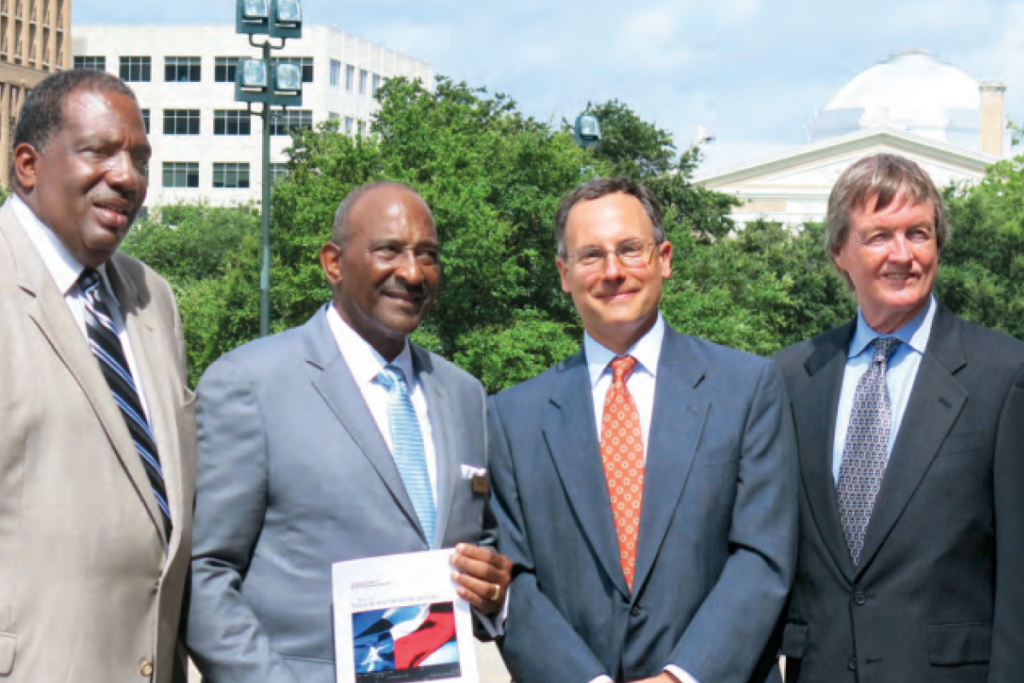
The BBR presented its survey of Black-owned businesses on the Texas Capitol steps in 2014. Pictured here: Former Senator Royce West, Jim Wyatt, Bruce Kellison, former UT President Bill Powers.
From 2012-2014, The BBR conducted studies of Black and Hispanic entrepreneurship in Austin. Austin was awash in startups, but it was unclear whether every aspiring entrepreneur was finding the onramp to launch a new business. The BBR studies identified specific strategies to create a more diverse and robust population of entrepreneurs.
One of the recommended strategies was an educational, capacity-building program. Rather than wait for another agency to take up the call, the BBR leveraged its knowledge of entrepreneurship and business expansion and launched its Readiness Training Program (RTP) to teach small business owners how to identify and secure public contracts. Since its inception in 2021, the program has graduated more than 200 business owners eager to apply their new knowledge to grow their fledgling companies.
The Next 100
True to its original mission, the Bureau of Business Research remains a bridge between the University and other sectors and is committed to supporting business and industry and the broader community through data collection and analysis.
The BBR still conducts traditional economic impact studies. In 2024, for example, it released a report on the economic impacts of a future small modular reactor industry in Texas. Last year, the BBR examined the economic impact of UT student volunteerism.
But traditional impact studies are now balanced by data-driven work tackling complex, unstructured, sociological problems. BBR researchers use data science to model decisions and navigate stakeholder tradeoffs across a range of critical areas, including sustainable and regional development, trust and cooperation in supply chains, health care and public health disparities, responsible artificial intelligence, interpersonal violence and safety, human trafficking and labor exploitation. This newer, technology-driven work dovetails with the IC² Institute’s focus on emerging technologies and the impact of technological innovations on humans and community well-being.
In 2025, Matt Kammer-Kerwick became the bureau’s 19th director. A self-described “operations research guy” who holds a Ph.D. in information systems and management science, Kammer-Kerwick is driving the shift towards research that supports strategic decision-making in a complex world.
Kammer-Kerwick framed BBR’s current direction: “We’re continuing to move away from the ‘publishing house’ and ‘repository’ elements of our legacy towards pursuing a decidedly forward-looking mission. We’re helping organizations — whether they’re businesses or nonprofits or government agencies — look at the future. The central question we’re asking today is this: ‘What can we do to help organizations make better decisions in these uncertain times?’”